
I first tasted Parotta Bread at a small Indian restaurant years ago, and I've been hooked ever since on those beautiful, flaky layers that pull apart so perfectly. What I love most is how simple the ingredient list is-just flour, butter, and a little patience creates something that tastes like it came straight from a street food stall in Chennai.
If you're craving more buttery comfort, try my Eggs in Hash Brown Nests | Easy and Addictive Easter Brunch Recipe or explore my collection of Quick & Easy Jamaican Banana Fritters in 10 Minutes!. And if you love flaky textures, my Easy Bomboloni alla Crema Recipe: 10 Steps to Bliss Donuts might be your next favorite.
Why You'll Love This Homemade Flatbread
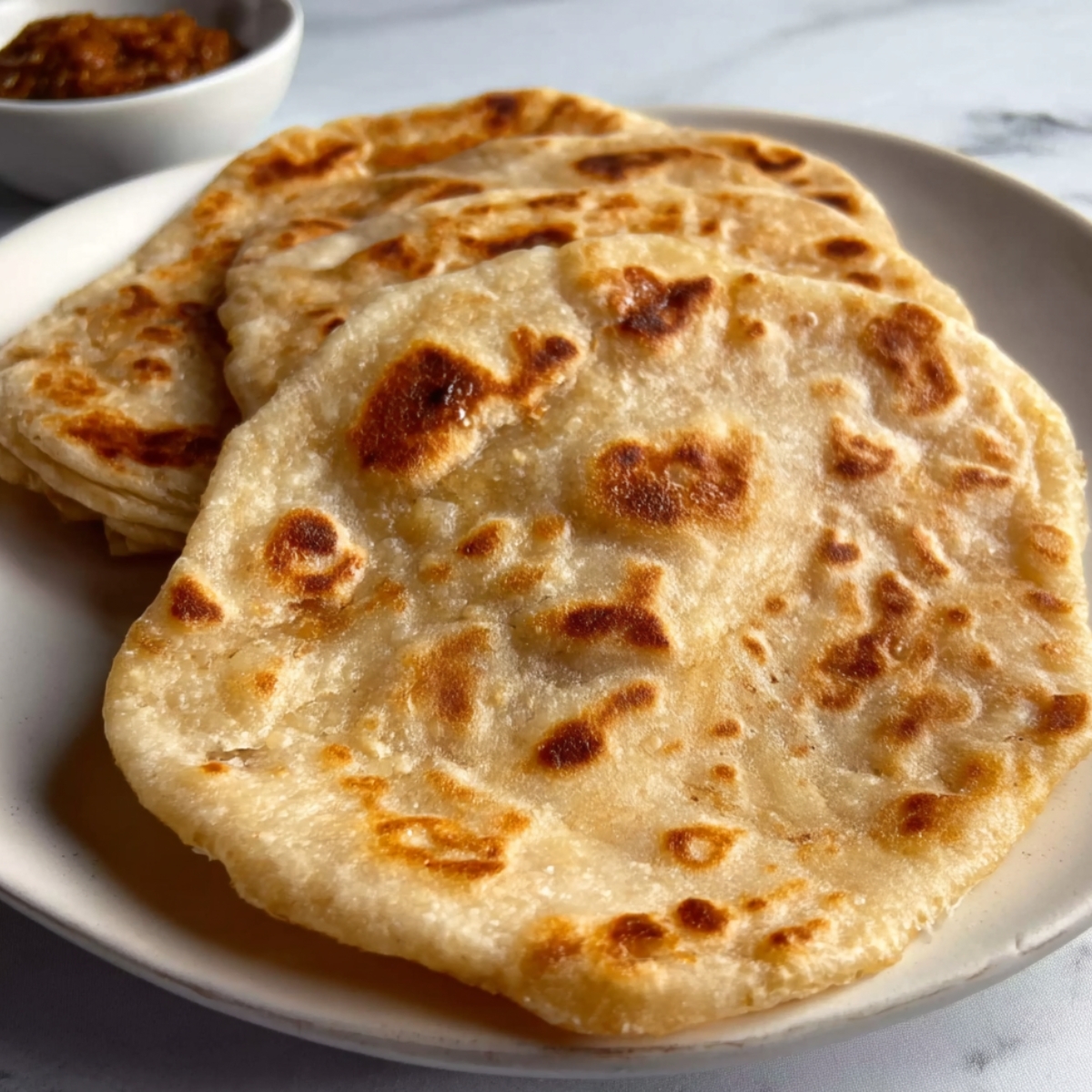
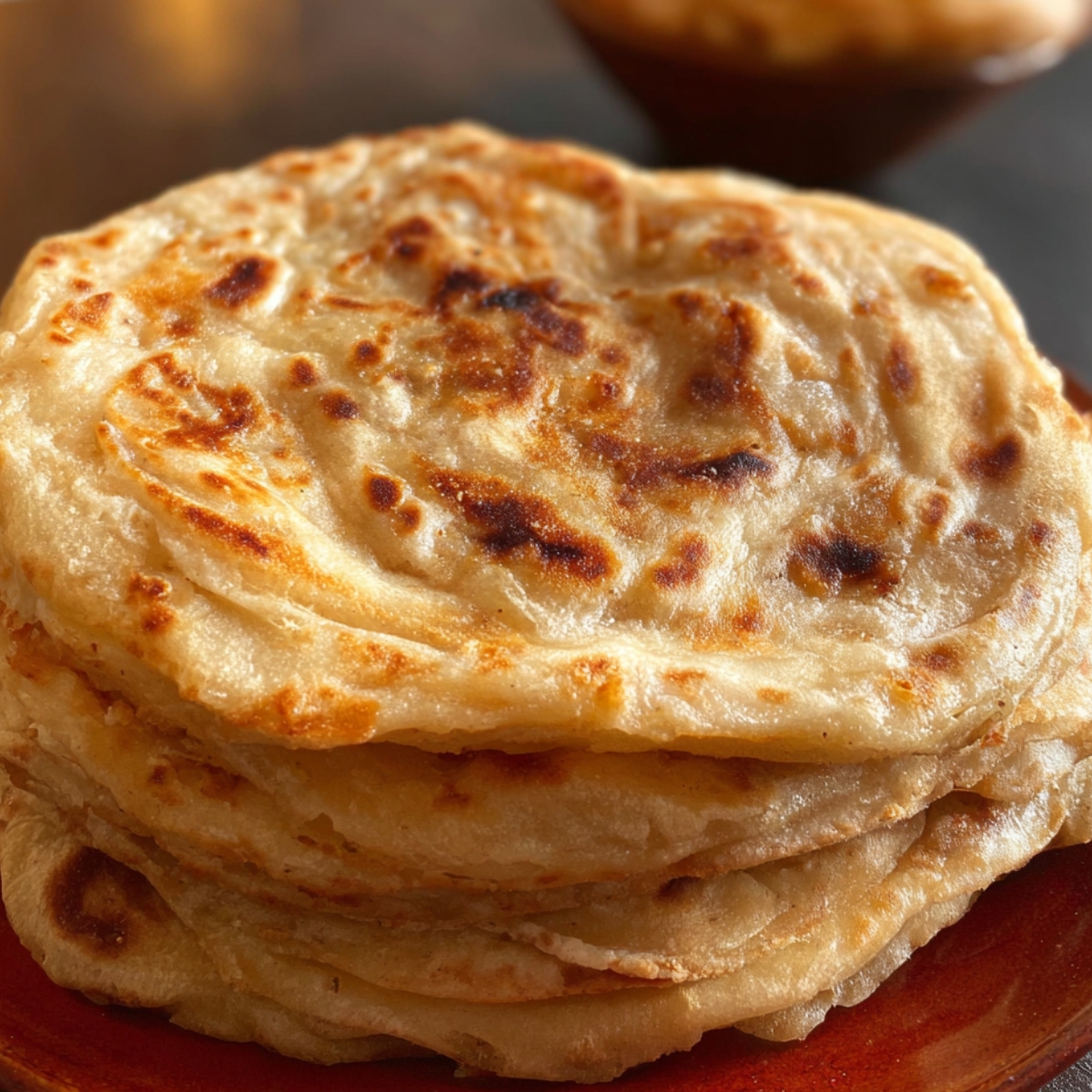
This easy Parotta Bread recipe creates restaurant-quality layered Parotta Bread right in your own kitchen. The texture is absolutely perfect-crispy edges with soft, buttery layers that pull apart in your hands. You'll love how the dough comes together quickly in a stand mixer, and the folding technique is actually kind of fun once you get into a rhythm.
The flavor is rich and buttery without being heavy, and the tawa cooking gives each Parotta Bread those beautiful golden brown spots. These Parotta Bread are incredibly versatile-serve them with curry, stew, or even just tear them apart and dip them in yogurt. Kids love pulling the layers apart, and adults love how authentic they taste compared to store-bought options.
Jump to:
Parotta Bread Ingredients
You'll need just a handful of basic ingredients to create these flaky, buttered parottas.
See Recipe Card Below This Post For ingredients Quantites
All-purpose flour: Forms the soft, elastic base of the dough. Maida flour works beautifully if you can find it, but regular all-purpose flour gives you perfect results too.
Salt: Balances the richness of the butter and enhances the overall flavor of the Parotta Bread.
Butter or ghee: Creates those gorgeous flaky layers and adds rich, golden flavor throughout. Starting with softened butter makes the dough easier to work with.
Hot water: Helps create a soft, pliable dough that's easy to stretch paper-thin without tearing.
how to make Parotta Bread
Mix the dough: Place the flour, salt, 1 tablespoon of softened butter or ghee, and hot water in your stand mixer bowl. Use the dough hook on low-medium speed to bring everything together.
Knead until elastic: Continue mixing for several minutes until the dough pulls cleanly away from the bowl sides and feels smooth and elastic to the touch.
Rest the dough: Cover the bowl with plastic wrap and let the dough rest for 30 minutes. This resting time makes the dough much easier to stretch later.
Portion the dough: Divide your rested dough into 12 equal pieces, keeping them roughly the same size for even cooking.
Shape into balls: Roll each piece into a smooth ball, then top each one with a bit of softened butter or ghee.
Stretch paper-thin: Use the palm of your hand to press each ball flat, stretching it into a very thin rectangle. Don't worry if you get a few small holes-that's totally normal. Add more butter if the dough resists stretching.
Create the layers: Fold the top edge down about 1 inch, then fold the bottom edge up about 1 inch. Keep folding both sides toward the center until they meet, creating a long, skinny strip of layered dough.
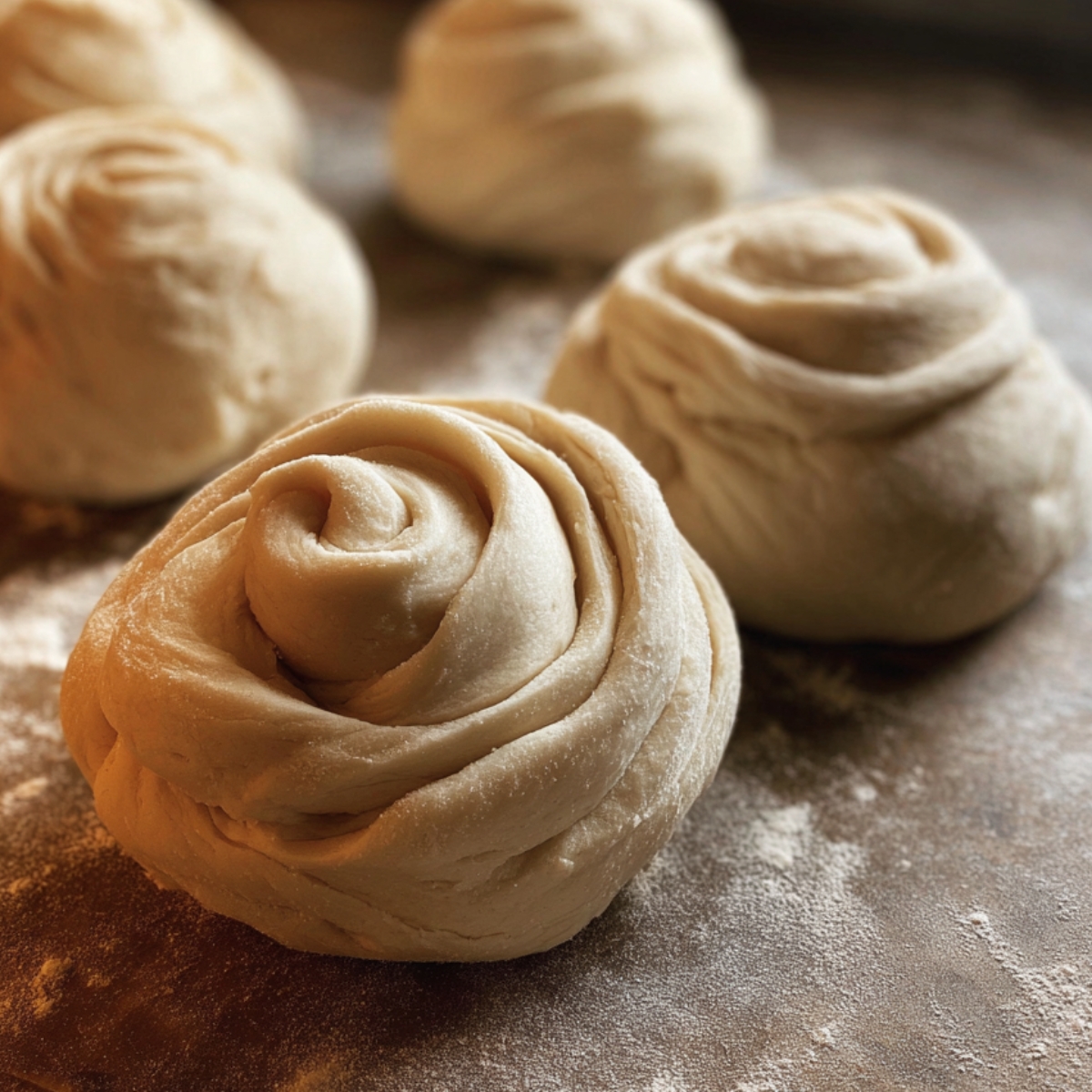
Form the spiral: Roll your folded strip into a tight spiral or coil, creating a flower-like shape. This spiral is what creates all those beautiful layers in the finished Parotta Bread.
Heat your pan: Set a tawa or cast iron skillet over medium heat and melt a bit of butter in it until it's nice and hot.
Roll and cook: Roll out 1 or 2 of your dough spirals until they're thin again, then place them carefully in the hot, buttered pan.
First side: Cook until you see bubbles forming on top and the bottom turns golden brown with crispy spots, usually about 1 to 2 minutes.
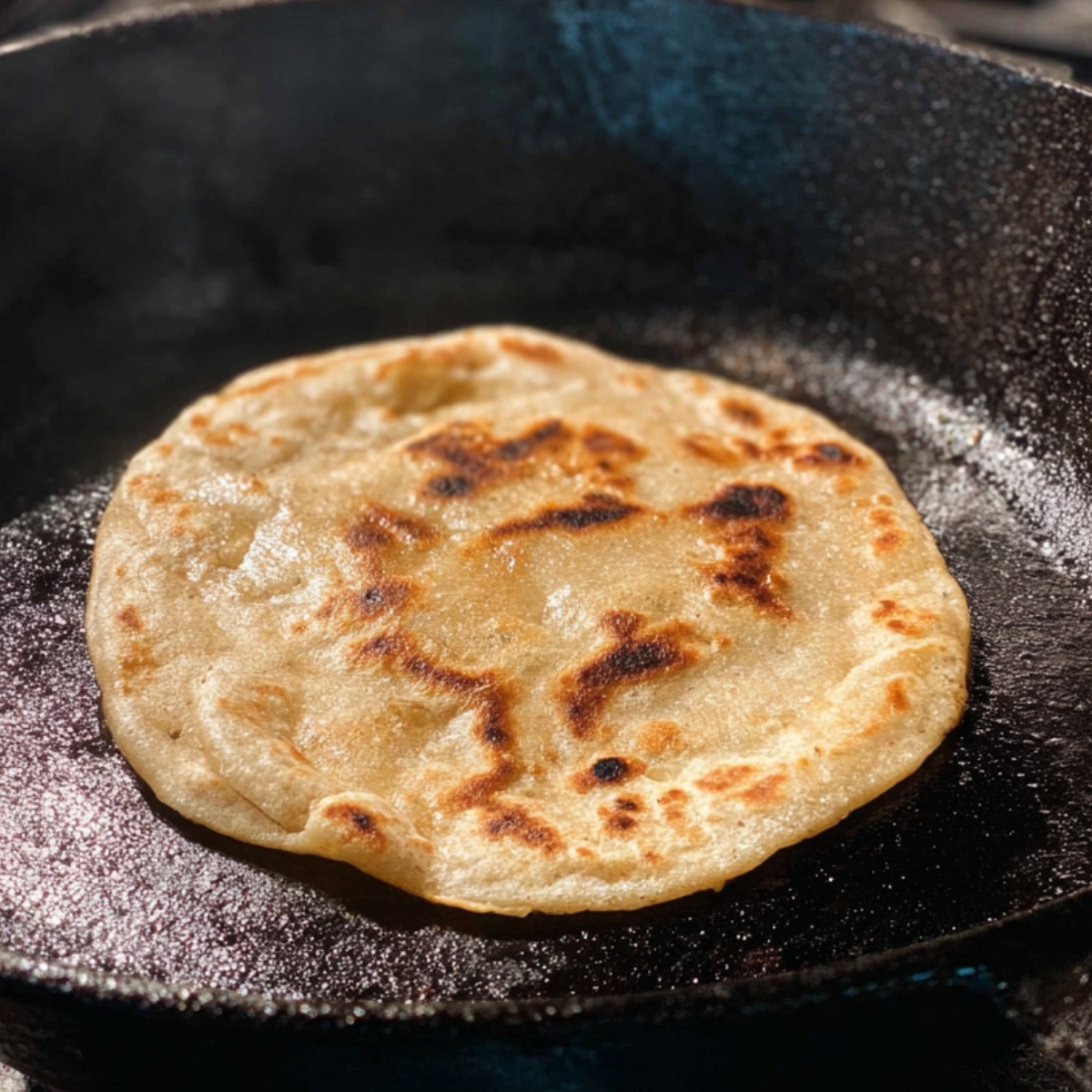
Butter and flip: Brush the uncooked top side with butter, then flip the Parotta Bread over. Cook for about 1 minute until golden brown spots appear.
Final flip: Flip once more to make sure both sides are evenly browned and crispy.
Serve warm: Remove from the pan and serve immediately while they're still warm and flaky.
Substitutions and Variations
You can customize this Parotta Bread recipe to work with what you have on hand. If you don't have ghee, regular butter works perfectly fine and gives you almost identical results. For a dairy-free version, try using coconut oil, though the flavor will be slightly different.
Whole wheat flour can replace half of the all-purpose flour if you want a heartier texture, though the layers won't be quite as delicate. Some people like adding a pinch of sugar to the dough for a hint of sweetness, especially if serving the parottas with savory curries.
Equipment for Parotta Bread
An electric stand mixer with a dough hook makes kneading the Parotta Bread dough incredibly easy and saves your arms from getting tired. If you don't have one, you can knead by hand for about 10 minutes until the dough becomes smooth and elastic.
A tawa or cast iron skillet gives you the best heat distribution and those gorgeous golden brown spots. Cast iron holds heat beautifully and creates an authentic texture. You'll also need plastic wrap to cover the dough while it rests, a rolling pin for flattening the dough spirals, and a brush for applying butter between flips.
How to Store Parotta Bread
Fresh parottas taste best right off the tawa while they're still warm and crispy. If you have leftovers, let them cool completely, then stack them with a piece of parchment paper between each one to prevent sticking. Store in an airtight container in the fridge for up to 3 days.
To reheat, warm them in a dry skillet over medium heat for about 30 seconds per side, or wrap in foil and heat in a 350°F oven for 5 minutes. The microwave works in a pinch, but you'll lose some of that crispy texture. For longer storage, freeze the cooled parottas in a freezer bag for up to 2 months, then thaw and reheat as needed.
expert tips
The key to getting those paper-thin layers is patience and enough butter or ghee. Don't rush the stretching process-if the dough resists, let it rest for a few more minutes before trying again. Your dough should be soft and elastic, not sticky or dry.
Make sure your tawa or skillet is properly heated before adding the first parotta. If it's not hot enough, the Parotta Bread will absorb too much butter and become greasy instead of crispy. Medium heat is your sweet spot-hot enough to create golden spots but not so hot that it burns.
Keep a small bowl of softened butter nearby while you're cooking. Brushing each side with butter as you flip creates those rich, flaky layers everyone loves. Work with 1 or 2 parottas at
FAQ
What is parotta bread?
Parotta bread is a flaky, layered Indian Parotta Bread made from simple ingredients like flour, butter, and water. It's known for its crispy exterior and soft, buttery layers that pull apart beautifully. Unlike regular roti, Parotta Bread has a richer texture thanks to the folding technique that creates multiple delicate layers.
What is parotta made of?
Parotta Bread is made of all-purpose flour, salt, butter or ghee, and hot water. The dough is stretched paper-thin, folded into layers, then coiled into spirals before being rolled out and cooked on a hot tawa. The butter between the layers creates that signature flaky texture everyone loves.
What is the difference between parotta and paratha?
Parotta Bread has more delicate, flaky layers created by folding the dough multiple times into thin strips, while paratha is typically thicker and often stuffed with vegetables or paneer. Parotta uses a spiral folding technique that creates crispy, buttery layers, whereas paratha is usually folded into triangles or squares and has a denser texture.
What is the difference between naan and paratha bread?
Naan is a leavened Parotta Bread made with yeast or baking powder and traditionally cooked in a tandoor oven, giving it a soft, chewy texture with charred spots. Paratha (and parotta) are unleavened Parotta Bread cooked on a flat griddle or tawa, with paratha being thicker and sometimes stuffed, while Parotta Bread is all about those thin, crispy layers created through folding.
Related
Looking for other recipes like this? Try these:

Pairing
These are my favorite dishes to serve with Parotta Bread


Flaky Parotta Bread
Ingredients
Method
- Place flour, salt, 1 tablespoon softened butter (or ghee), and hot water in the bowl of an electric stand mixer. Knead on low-medium speed with the dough hook attachment until smooth. prep
- Continue kneading for a few minutes, until the dough pulls away from the sides of the bowl and becomes soft and elastic. prep
- Cover the dough with plastic wrap and let it rest for 30 minutes. custom time
- Roll each dough portion into a ball and place some softened butter or ghee on top of each ball. prep
- Press each dough ball gently with your palm, thinning it out into a paper-thin rectangle. Add more butter or ghee if needed to help stretch it. prep
- Fold each side of the dough by 1 inch, then fold again until the edges meet in the center. You should have a long, layered strip. prep
- Roll the folded dough into a ball, creating a flower-like shape that will give the parotta its layered texture. prep
- Heat a tawa or cast iron skillet over medium heat. Melt some butter in the pan. prep
- Once the pan is hot, roll out 1-2 dough flowers into thin rounds and place them in the hot buttered pan. Cook until golden brown on one side and bubbly. cook
- Brush the uncooked side with butter before flipping it over to cook the other side for about 1 minute. cook
- Flip again to brown both sides evenly. remove from pan once both sides are golden brown. finish
- Serve warm, and enjoy your parotta bread with your favorite dishes. finish
Leave a Reply