
The first time I made Kung Pao Chicken Noodles , Michael wandered into the kitchen following the smell of toasted Sichuan peppercorns and declared it "smells like the restaurant!" He wasn't wrong. The combination of heat from dried chilies, that tingly numbing sensation from the peppercorns, and the satisfying chew of the noodles makes this dish irresistible.
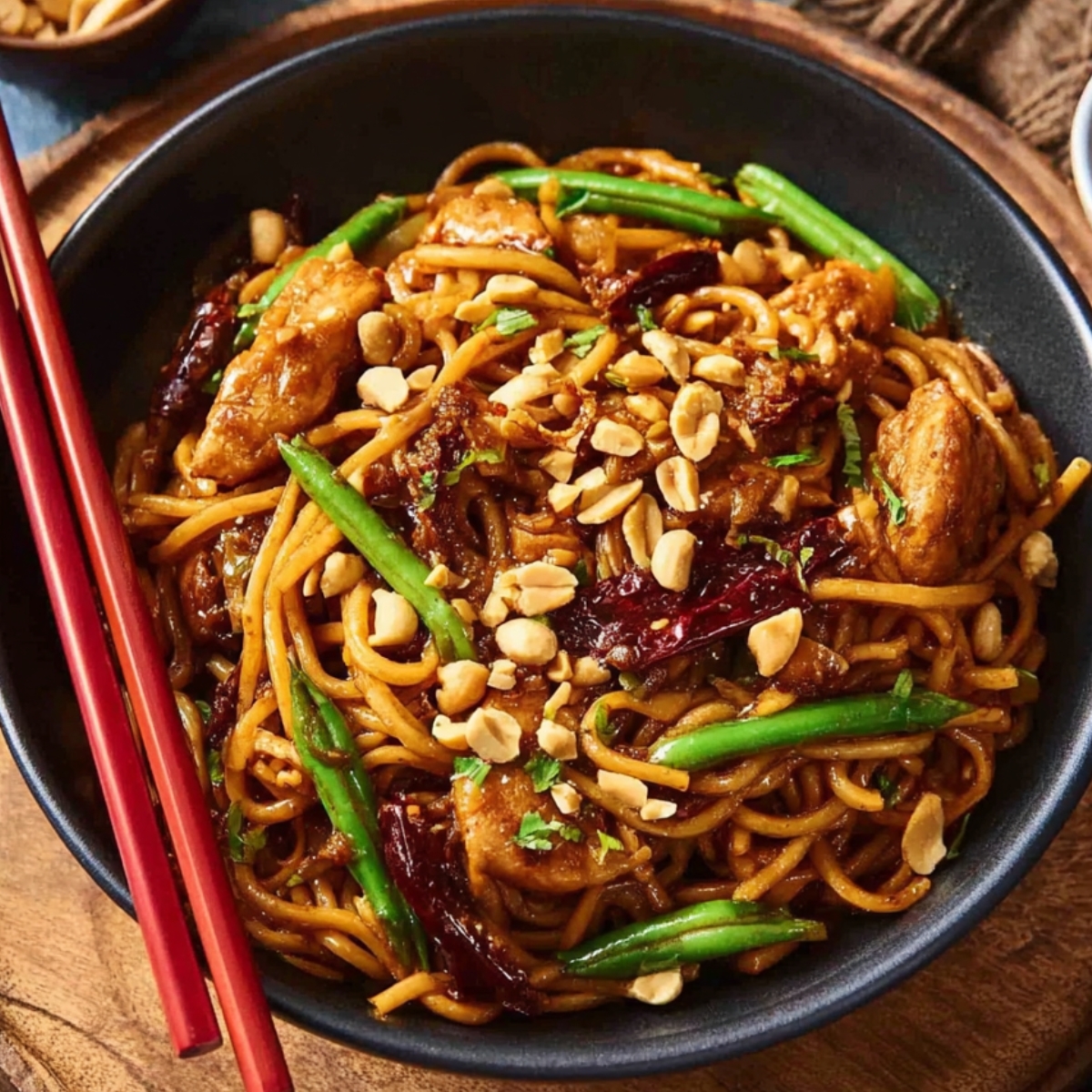
If you love bold flavors and quick dinners, you'll want to add this to your rotation alongside Easy Baked Caesar Chicken recipe and Easy Beef Fajita Bowls recipe . It comes together in 30 minutes, uses simple ingredients, and tastes better than takeout. Trust me, once you make Easy Chicken Divan Casserole recipe , you won't go back.
Why You'll Love This Kung Pao Chicken Noodles
This recipe checks so many boxes. It's quick, taking only 30 minutes from start to finish, which makes it perfect for busy weeknights when you want something satisfying but don't have hours to spend in the kitchen. The flavors are bold and complex, with layers of heat, sweetness, tang, and that signature numbing tingle from the Sichuan peppercorn noodles.
You'll love how the Kung Pao Chicken Noodles come together in one pan, meaning less cleanup and more time to relax after dinner. The sauce clings beautifully to every strand of noodle and piece of chicken, and the peanuts add just the right amount of crunch. It's also incredibly adaptable. You can dial the heat up or down depending on your family's spice tolerance, swap the protein, or even make it vegetarian.
Plus, making Chinese noodles at home means you control exactly what goes into your dish. No mystery ingredients, no overly salty takeout, just fresh, vibrant flavors that taste like they came from your favorite restaurant. This is one of those easy dinner recipes that feels special every single time.
Jump to:
Kung Pao Chicken Noodles Ingredients
Here's everything you need to make these flavorful noodles at home.
See Recipe Card Below This Post For ingredients Quantites
Chicken:
- Boneless chicken breast , sliced: The protein base of the dish. Slicing it thin helps it cook quickly and evenly, and the marinade keeps it tender.
- Salt : Seasons the Kung Pao Chicken Noodles from the inside out.
- Black pepper : Adds a subtle warmth and depth.
- Soy sauce : Brings savory umami flavor and helps the Kung Pao Chicken Noodles brown beautifully.
- Cornstarch : Coats the Kung Pao Chicken Noodles and creates a light, velvety texture. It also helps the sauce cling to every piece.
- Olive oil : Used to stir-fry the Kung Pao Chicken Noodles until golden and cooked through.
Sauce:
- All-purpose soy sauce : The salty, savory backbone of the sauce.
- Dark soy sauce : Adds deep color and a slightly sweeter, richer flavor than regular soy sauce.
- Oyster sauce : Brings a touch of sweetness and umami that makes the sauce taste restaurant-quality.
- Sriracha sauce : Delivers the heat. You can adjust this up or down based on your spice preference.
- White vinegar : Cuts through the richness and adds a bright, tangy note.
- Brown sugar : Balances the heat and tang with just the right amount of sweetness.
- Chicken bouillon powder : Boosts the savory depth and rounds out all the flavors.
- Cornstarch: Thickens the sauce so it coats the noodles beautifully instead of pooling at the bottom of the bowl.
- Water : Loosens the sauce to the perfect consistency.
Noodles:
- Noodles : Use your favorite type. Egg noodles, rice noodles, or even lo mein noodles work great. Cook them until just tender so they don't get mushy when you toss them in the sauce.
- Olive oil : Used to sauté the aromatics and toast the peanuts.
- Garlic cloves , minced: Adds aromatic, savory flavor that fills your kitchen with the best smell.
- Ginger , finely chopped: Brings a warm, slightly spicy note that's essential in Chinese cooking.
- Scallions, white part chopped and green part cut into 2-inch sticks: The white parts get cooked with the aromatics for flavor, and the green parts stay fresh and crunchy as a garnish.
- Dried red chilies : These bring the signature heat and a touch of smokiness. Leave them whole or break them open for extra spice.
- Sichuan peppercorns , lightly crushed: The star ingredient that gives this dish its unique tingling, numbing sensation. Don't skip them.
- Roasted peanuts : Add crunch and a toasty, nutty flavor. Toasting them in the pan makes them even better.
Garnish:
- Chopped peanuts: Extra crunch on top.
- Sliced scallion greens: Fresh, bright color and a mild onion flavor to finish the dish.
how to make Kung Pao Chicken Noodles
Marinate the chicken: In a bowl, combine the sliced Kung Pao Chicken Noodles with salt, pepper, soy sauce, and cornstarch. Mix everything together until the chicken is evenly coated, then let it sit for 10-15 minutes. This gives the flavors time to soak in and helps the chicken stay tender when you cook it.
Cook the noodles: Bring a pot of water to a boil and cook the noodles according to the package instructions until they're just tender but still have a little chew. Drain them well and set aside.
Prepare the sauce: In a small bowl, whisk together the all-purpose soy sauce, dark soy sauce, oyster sauce, sriracha, white vinegar, brown sugar, Kung Pao Chicken Noodles bouillon powder, cornstarch, and water. Stir until the sugar and cornstarch dissolve completely. Set this aside so it's ready to go.
Stir-fry the chicken: Heat 1 tablespoon of olive oil in a large pan or wok over medium-high heat. Once the oil is shimmering, add the marinated Kung Pao Chicken Noodles in a single layer. Let it cook undisturbed for about 2 minutes so it gets a nice golden color, then stir-fry until cooked through, about 3-4 minutes total. Remove the chicken from the pan and set it aside.
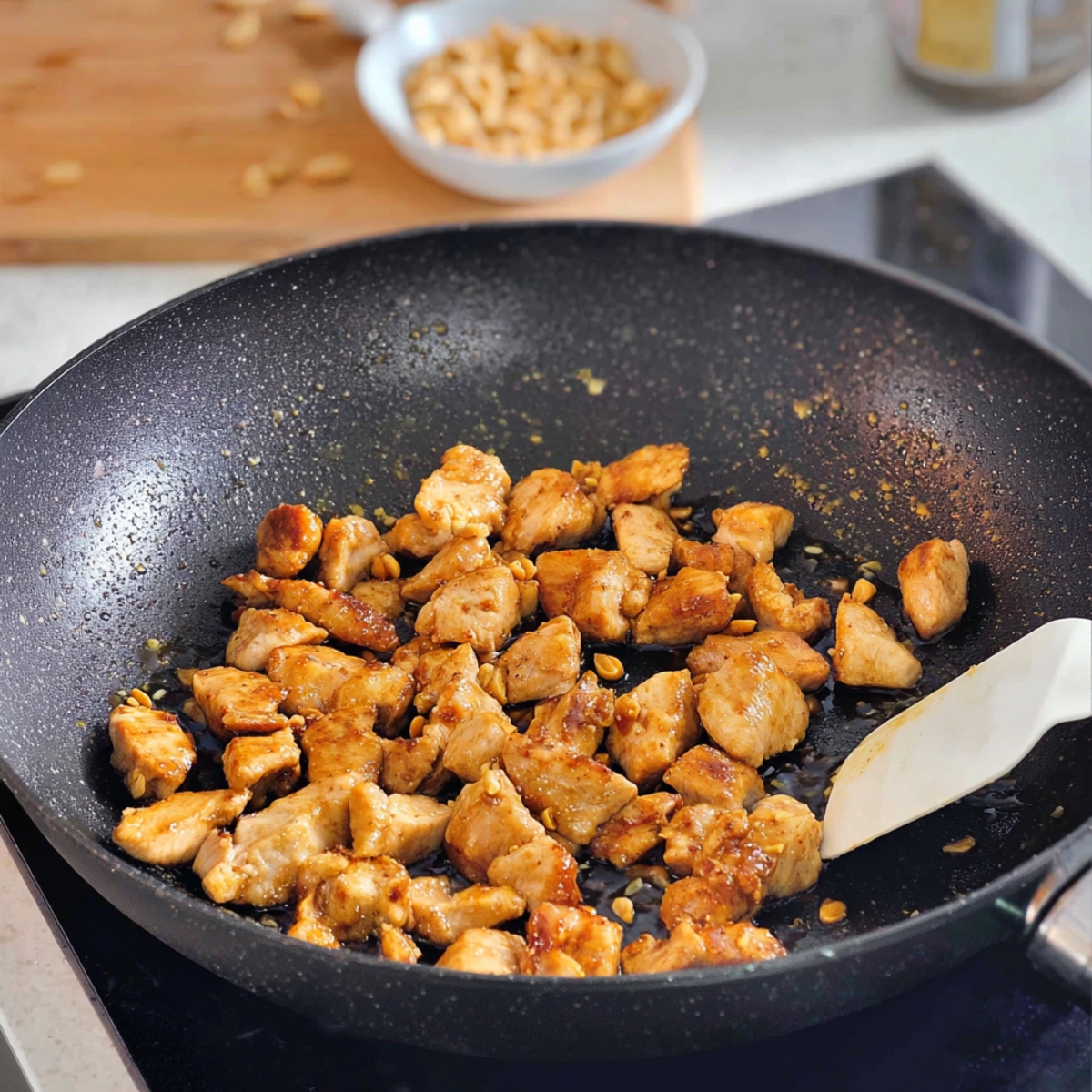
Cook the aromatics and peanuts: Add the remaining 1 tablespoon of olive oil to the same pan. Toss in the minced garlic, chopped ginger, the white parts of the scallions, dried red chilies, and crushed Sichuan peppercorns. Sauté for 2-3 minutes until everything smells amazing and the garlic turns golden. Add the roasted peanuts and toast them for another 2-3 minutes, stirring frequently so they don't burn.
Simmer the sauce: Lower the heat to medium and pour in the prepared sauce. Let it simmer, stirring constantly, until it thickens slightly and starts bubbling, about 1-2 minutes. The sauce should look glossy and coat the back of a spoon.
Combine everything: Add the cooked noodles and stir-fried Kung Pao Chicken Noodles back into the pan. Toss everything together until the noodles and chicken are completely coated in the sauce and heated through, about 1-2 minutes.
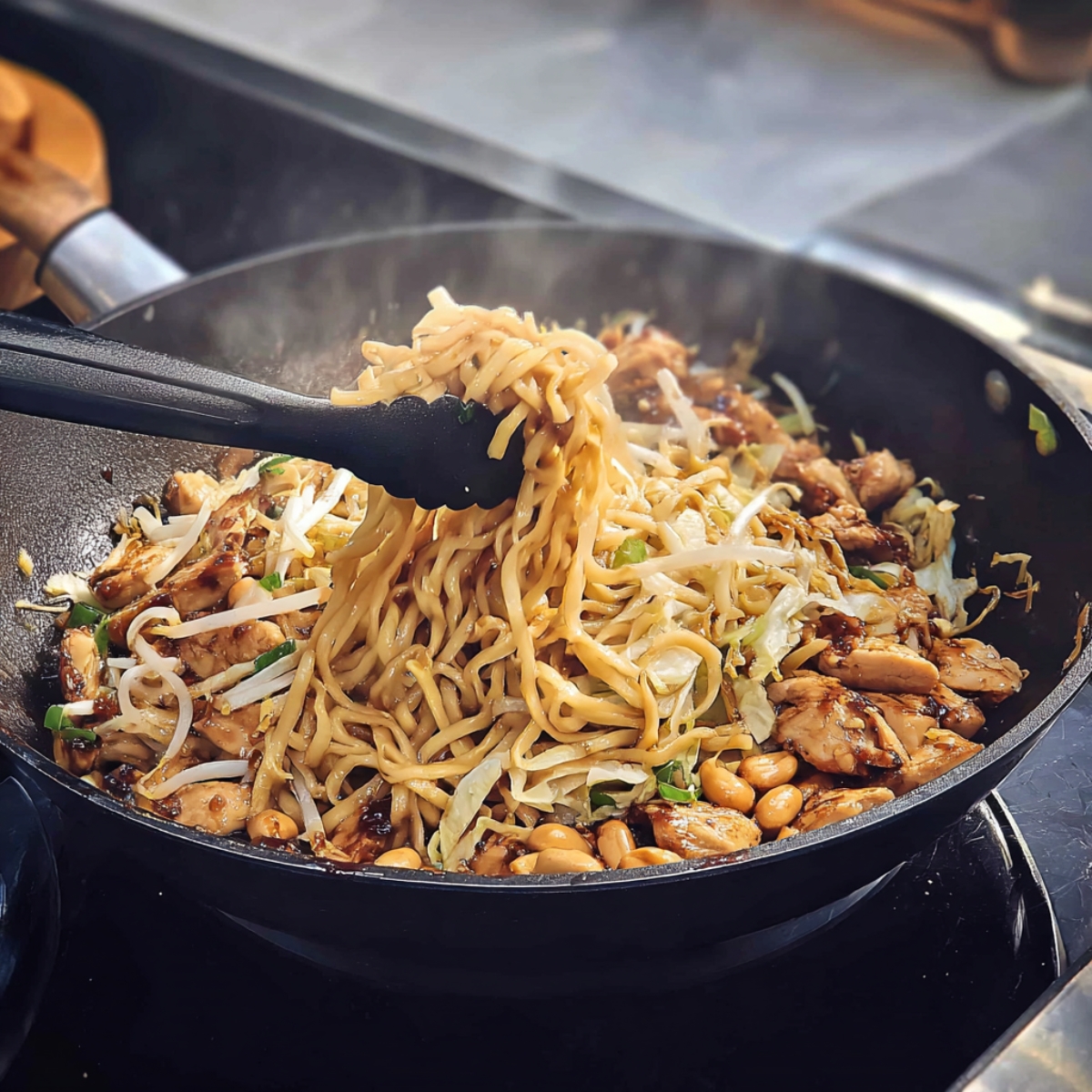
Finish and serve: Turn off the heat and add the green scallion sticks. Give everything one last gentle toss so the scallions stay crisp and fresh. Serve the noodles hot, garnished with extra chopped peanuts and sliced scallion greens on top.
Substitutions and Variations
This recipe is flexible and easy to adapt based on what you have on hand or your dietary preferences.
Protein swaps: If you're not a fan of chicken, try using thinly sliced pork, shrimp, or even tofu for a vegetarian version. Just adjust the cooking time based on what protein you use. Shrimp cooks fast, so it only needs 2-3 minutes in the pan.
Noodle options: Any noodle works here. Egg noodles, rice noodles, udon, soba, or even spaghetti in a pinch. If you want to keep it low-carb, use zucchini noodles or shirataki noodles. Just note that zucchini noodles will release water, so you may need to cook them separately and drain them well before tossing with the sauce.
Heat level: Control the spice by adjusting the amount of sriracha and dried chilies. For a milder version, use just 4-5 chilies and 1 teaspoon of sriracha. If you love heat, add more chilies and a pinch of red pepper flakes.
Vegetables: Add more veggies to bulk up the dish. Bell peppers, snap peas, broccoli, or baby corn all work beautifully. Just stir-fry them with the aromatics before adding the sauce.
Nut-free option: If you have a peanut allergy, swap the peanuts for cashews or leave them out entirely. The dish will still be delicious, just without the signature crunch.
Equipment for Kung Pao Chicken Noodles
You don't need much to make this recipe, just a few basic kitchen tools.
Bowl (for marinating chicken): Any medium-sized bowl works. This is where the Kung Pao Chicken Noodles soaks up all that flavor.
Small bowl (for preparing sauce): A small mixing bowl or even a measuring cup with a spout makes it easy to whisk the sauce together and pour it into the pan.
Large pan or wok: A wok is ideal because of its high sides and even heat distribution, but a large skillet or sauté pan works just as well. Make sure it's big enough to toss everything together without spilling.
Cooking spoon or spatula: A wooden spoon or heat-resistant silicone spatula is perfect for stirring and tossing the noodles.
Storage and Reheating Tips
These stir-fried noodles taste best fresh, but they store well if you have leftovers.
Refrigerator: Let the noodles cool completely, then transfer them to an airtight container. They'll keep in the fridge for up to 3 days. The noodles might absorb some of the sauce as they sit, so they may look a little drier when you reheat them.
Reheating: The best way to reheat is in a pan or wok over medium heat. Add a splash of water or a drizzle of soy sauce to loosen the sauce, then toss until heated through. You can also microwave individual portions, but the noodles won't be quite as good. Heat in 30-second intervals, stirring in between, until hot.
Freezing: I don't recommend freezing this dish because the noodles can get mushy when thawed. If you want to meal prep, it's better to freeze the cooked Kung Pao Chicken Noodles and sauce separately, then cook fresh noodles when you're ready to eat.
expert tips
Don't skip the marinade: Even though 10-15 minutes doesn't seem like much time, it makes a huge difference. The cornstarch coating keeps the Kung Pao Chicken Noodles tender and helps the sauce stick.
Use high heat for stir-frying: A hot pan is key to getting that restaurant-style sear on the Kung Pao Chicken Noodles and keeping the vegetables crisp. If your pan isn't hot enough, everything will steam instead of fry.
Toast the Sichuan peppercorns: Crushing them lightly before adding them to the pan releases their oils and intensifies that signature numbing, tingly flavor. If you can't find Sichuan peppercorns, you can leave them out, but the dish won't taste quite the same.
Cook the noodles al dente: Slightly undercook the noodles because they'll continue cooking when you toss them in the hot sauce. This prevents them from getting mushy.
Prep everything before you start cooking: Stir-frying moves fast. Have your Kung Pao Chicken Noodles marinated, your sauce whisked, your aromatics chopped, and your noodles cooked before you heat the pan. Once you start, there's no time to pause.
Adjust the sauce to your taste: If you like it spicier, add more sriracha or dried chilies. If you prefer it sweeter, add a bit more brown sugar. Taste the sauce before you add it to the noodles and adjust as needed.
FAQ
What are kung pao chicken noodles?
Kung pao chicken noodles are a stir-fried dish that combines tender chicken, chewy noodles, roasted peanuts, and a bold sauce made with soy sauce, vinegar, and chili peppers. The dish gets its unique flavor from Sichuan peppercorns and dried red chilies, which add heat and a signature tingling sensation. It's inspired by the classic Kung Pao chicken, but with noodles instead of rice.
Is Kung Pao Chicken sweet or spicy?
Kung Pao Chicken Noodles is both. The sauce has a balance of spicy heat from dried chilies and sriracha, sweetness from brown sugar, and tanginess from vinegar. The level of spice can be adjusted based on how many chilies you use and how much sriracha you add. Some versions lean sweeter, while others are more on the spicy side, so you can customize it to your taste.
What do Kung Pao Noodles taste like?
Kung Pao noodles taste savory, spicy, tangy, and slightly sweet all at once. The sauce is rich and glossy, with deep umami from soy sauce and oyster sauce, a kick of heat from chilies, and a unique tingling sensation from Sichuan peppercorns. The peanuts add a crunchy, toasty element, and the noodles soak up all those flavors. It's bold, satisfying, and a little addictive.
Can you eat Kung Pao Chicken with noodles?
Absolutely! While Kung Pao chicken is traditionally served over rice, pairing it with noodles is a delicious twist that's very common in home cooking and some restaurants. The noodles soak up the sauce beautifully and add a chewy texture that complements the tender Kung Pao Chicken Noodles and crunchy peanuts. It turns the dish into a complete, one-bowl meal that's incredibly satisfying.
Related
Looking for other recipes like this? Try these:
Pairing
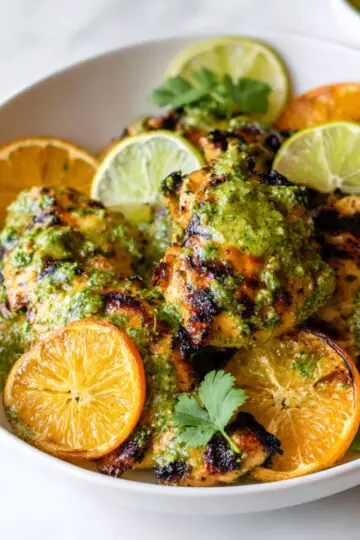
These are my favorite dishes to serve with Kung Pao Chicken Noodles
Kung Pao Chicken Noodles
Ingredients
Method
- In a bowl, combine the chicken with salt, pepper, soy sauce, and cornstarch. Mix well and let it marinate for 10-15 minutes while you prepare the sauce and noodles. prep
- Boil the noodles according to package instructions until just tender (al dente). Drain and set aside. prep
- In a small bowl, whisk together soy sauce, dark soy sauce, oyster sauce, sriracha, vinegar, brown sugar, chicken bouillon powder, cornstarch, and water. Set aside. mix
- Heat 1 tablespoon of olive oil in a large pan or wok over medium-high heat. Add the marinated chicken and stir-fry until golden and cooked through. Remove from the pan and set aside. fry
- Add an additional 1 tablespoon of olive oil to the same pan. Toss in garlic, ginger, the white part of the scallions, and dried chilies. Sauté for 2-3 minutes until fragrant. Add the peanuts and toast for another 2-3 minutes until golden. sauté
- Lower the heat to medium. Pour in the prepared sauce and simmer until it thickens slightly and starts bubbling. Add the cooked noodles and chicken. Toss well until evenly coated in sauce. mix
- Turn off the heat and add the green scallion sticks. Give everything one last toss. finish
- Serve hot, garnished with chopped peanuts and sliced scallion greens. finish
Leave a Reply