
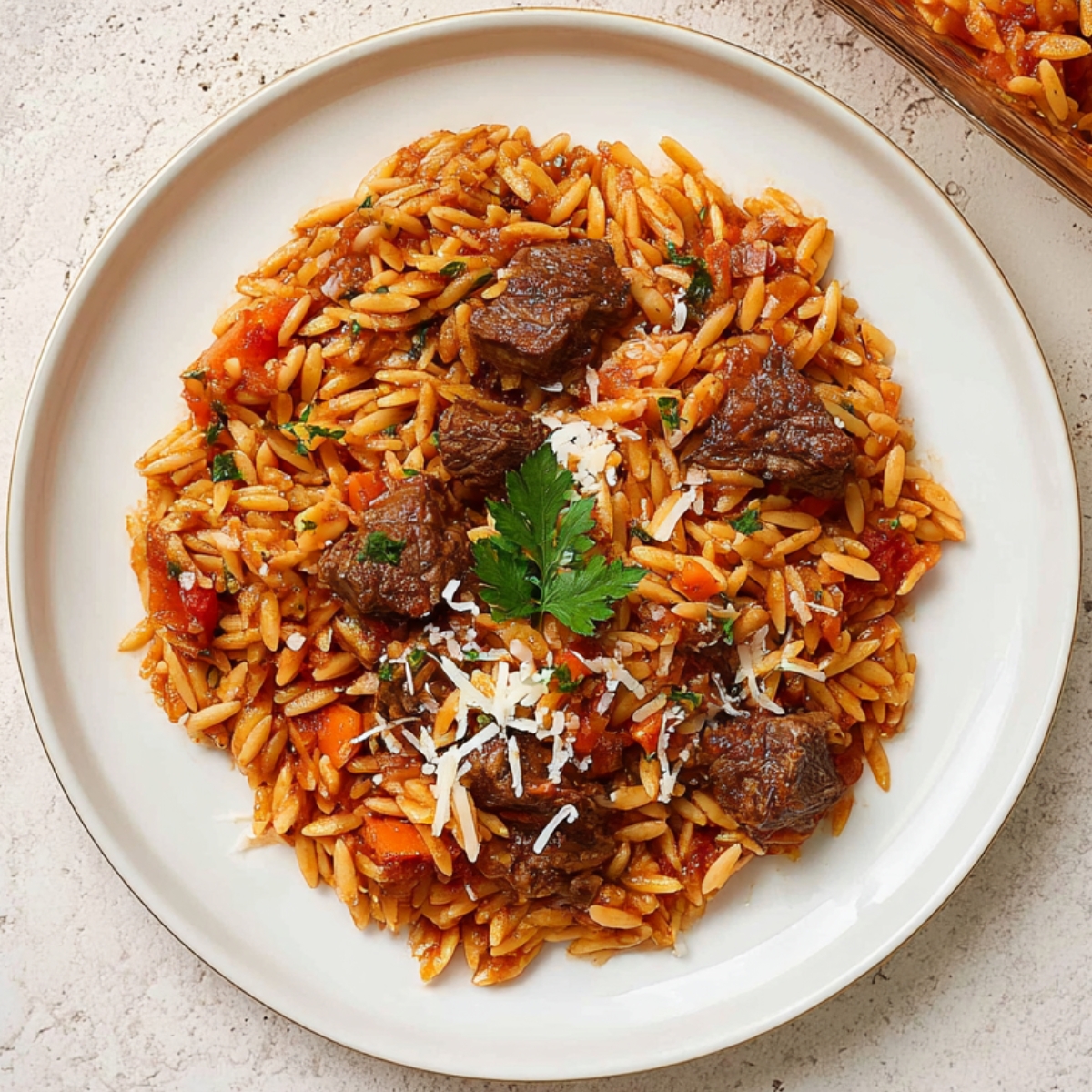
Greek beef stew with orzo pasta is the kind of dish that makes the whole house smell like a Sunday afternoon in a Greek kitchen. The Greek beef stew with orzo pasta soaks up every bit of that rich tomato and cinnamon-spiced sauce, and the beef practically falls apart. I first tasted a version of this at a tiny family-run taverna on a trip years ago, and I came home completely obsessed. The best part? It's easier than it looks, and it uses simple, honest ingredients you can find anywhere.
If you love cozy baked Greek beef stew with orzo pasta dishes, you might also enjoy our Easy Chicken Cordon Bleu Recipe or our Easy Honey Mustard Chicken recipe And for another weeknight-friendly stew, our Easy Homemade Sloppy Joes Recipe is always a reader favorite.
Why You'll Love This Greek beef stew with orzo pasta
This dish hits every note a family dinner should. The beef gets long and slow and deeply flavorful from a gentle braise on the stovetop before it ever sees the oven. The Greek beef stew with orzo pasta gets toasted golden in olive oil first, which gives it this nutty little edge that makes the whole thing taste more complex than the ingredient list suggests. The cinnamon stick in the sauce isn't overwhelming it just quietly adds warmth in a way that tastes unmistakably Greek. And the melted cheese on top? That's the finishing touch that takes it from good to the kind of good where people go back for seconds without asking.
Jump to:
Greek beef stew with orzo pasta Ingredients
Here's everything you'll need for this Greek beef stew with Greek beef stew with orzo pasta .
See Recipe Card Below This Post For Ingredients Quantities
- diced veal shoulder or diced beef: The base of the stew. Veal is traditional and turns incredibly tender, but diced beef shoulder works beautifully too. Either way, you want pieces that can handle a long, slow braise.
- medium red onions, finely chopped: Red onions have a slightly sweeter flavor than white, which balances the acidity of the tomatoes nicely as everything cooks down.
- carrots, sliced thick: Carrots add a gentle natural sweetness to the sauce and hold their shape through the long simmer, giving the dish texture and color.
- chopped tomatoes: This is your sauce base. Canned tomatoes give you a consistent, rich flavor without needing fresh summer tomatoes.
- tomato paste: Deepens and concentrates the tomato flavor. Always cook it off in the oil for a minute before adding liquid - it makes a real difference.
- sugar: Just enough to round out the acidity of the tomatoes. You won't taste sweetness, you'll just taste balance.
- glass of red wine: Adds body, depth, and a subtle richness to the sauce. A dry red you'd actually drink works best here.
- cinnamon stick: The signature Greek touch. It perfumes the whole sauce as it simmers and gives this dish its unmistakable warmth. Remember to fish it out before baking.
- olive oil: Used in two stages - first to sauté the vegetables and brown the meat, then to toast the Greek beef stew with orzo pasta . Good olive oil really does make a difference in a dish like this.
- orzo pasta (kritharaki / manestra): Also called kritharaki or manestra in Greek. The Greek beef stew with Greek beef stew with orzo pasta soaks up the sauce as it bakes, turning creamy and rich on the inside with slightly set edges on the outside.
- grated kefalotyri or feta cheese: Kefalotyri is a hard, salty, nutty Greek cheese that melts and browns beautifully on top. Feta works as a substitute and adds a creamier, tangier finish.
How to Make Greek beef stew with orzo pasta
Pat dry the meat: Use paper towels to pat the diced veal or beef completely dry. This step is small but important dry meat browns instead of steams, and that crust is where a lot of flavor comes from.
Sauté onions and carrots: Heat the ½ cup of olive oil in a large pan over medium-low heat. Add the chopped onions and sliced carrots and cook for about 5 minutes, stirring occasionally, until they've softened and the onions look translucent and a little golden at the edges.
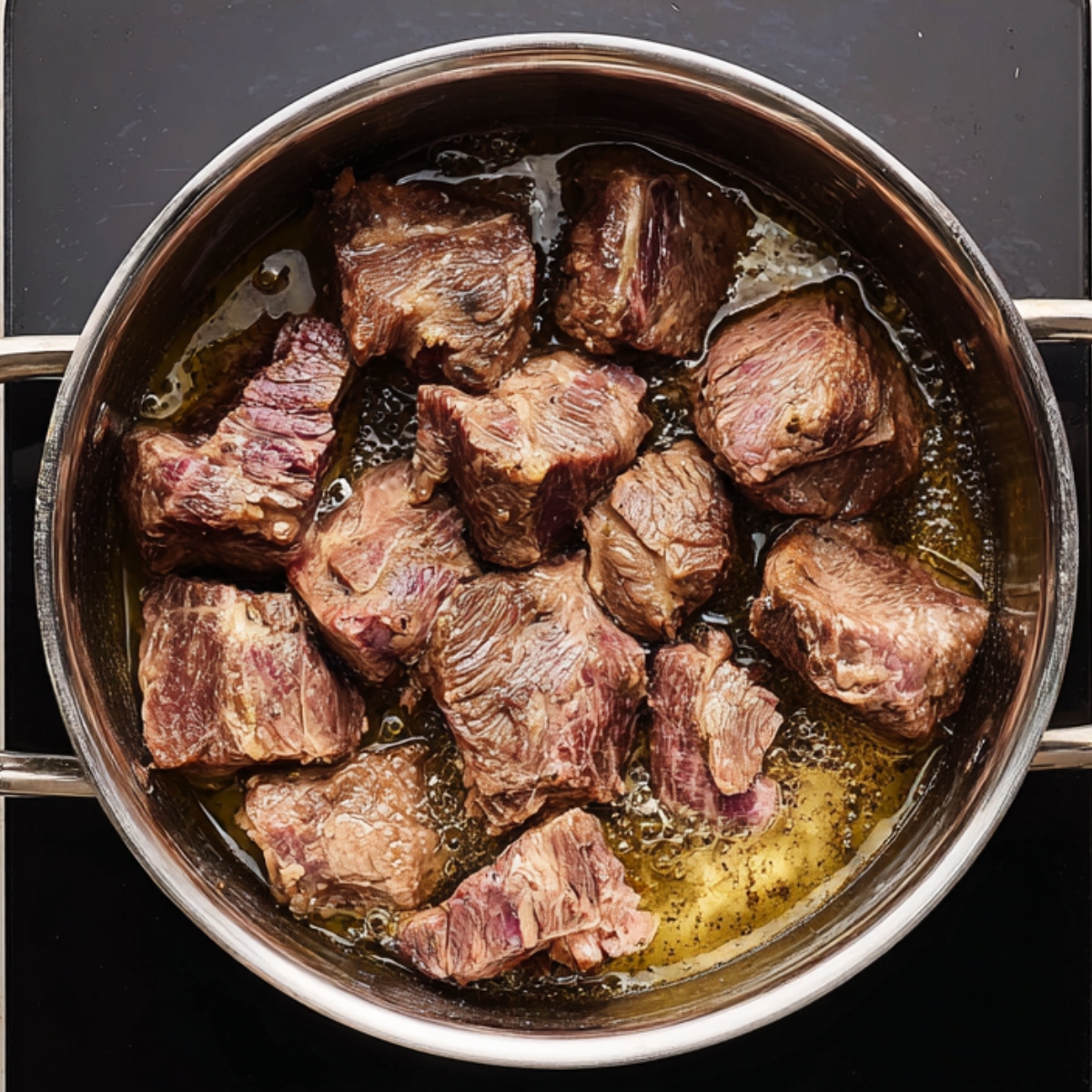
Brown the meat: Turn the heat up to medium-high and add the diced veal or beef to the pan. Let it brown on all sides, turning the pieces every couple of minutes. You're looking for a golden-brown crust this takes around 6 to 8 minutes and is worth every second.
Add tomato paste and wine: Stir in the 2 tablespoons of tomato paste and let it cook directly in the oil for about 1 minute, stirring so it doesn't burn. Then pour in the glass of red wine. Let it bubble and cook off for 2 to 3 minutes until the sharp alcohol smell softens and the liquid reduces a little.
Add tomatoes and spices: Add the tin of chopped tomatoes, the teaspoon of sugar, the cinnamon stick, and a generous pinch of salt and pepper. Pour in enough water to just cover the meat and stir everything together.
Simmer the beef: Lower the heat, cover the pan, and let everything simmer gently for about 45 minutes. Check it every so often and add a little more water if the sauce is reducing too quickly. You want the beef tender enough to pull apart easily when pressed with a fork.
Prepare orzo pasta: While the beef is simmering, heat 3 tablespoons of olive oil in a separate pan over medium heat. Add the Greek beef stew with Greek beef stew with orzo pasta pasta and stir it around for 3 to 4 minutes until it turns a warm, toasty golden color. This step adds a nutty flavor and helps the pasta hold its shape during baking.
Combine orzo and beef: Remove the cinnamon stick from the beef mixture. Transfer both the toasted Greek beef stew with orzo pasta and the beef mixture into a large ovenproof tray and mix them together well. Add enough water so the liquid just covers the Greek beef stew with orzo pasta the orzo will absorb it as it bakes.
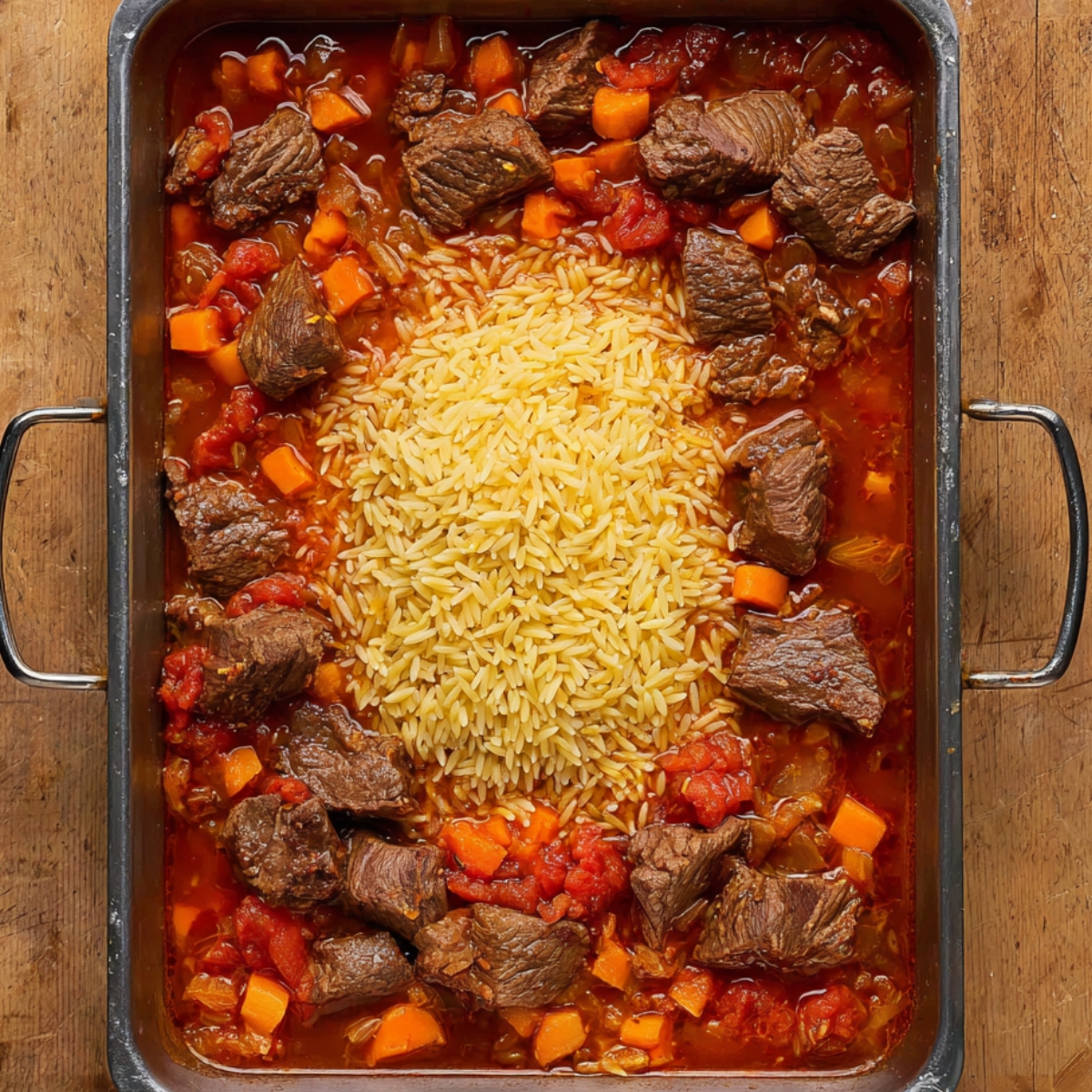
Bake covered: Preheat your oven to 180°C (350°F). Cover the tray tightly with aluminum foil and bake for 30 minutes.
Finish uncovered: After 30 minutes, carefully remove the foil. If the Greek beef stew with orzo pasta looks dry or is starting to stick, add a small splash of water. Bake uncovered for another 15 minutes, until the top is set and the edges look slightly golden.
Serve: Sprinkle the grated kefalotyri or feta generously over the top and serve hot, straight from the tray.
Substitutions and Variations
Meat: Lamb works wonderfully in place of veal or beef and is actually a very traditional variation. Bone-in cuts add extra flavor if you don't mind picking them out later. Chicken thighs can also work for a lighter version, though the cook time will be shorter.
Cheese: Can't find kefalotyri? Pecorino Romano or aged Parmesan are the closest in texture and saltiness. Feta is softer and creamier but still delicious.
Wine: If you'd rather skip the wine, replace it with an equal amount of beef broth or just water. The sauce will be slightly lighter in flavor but still very good.
Orzo: If you genuinely can't find Greek beef stew with orzo pasta , small Greek beef stew with orzo pasta shapes like ditalini or even pastina can be substituted. Avoid long pasta - it won't bake the same way. Rice is a less traditional substitute but does work in a pinch (see the FAQ section for notes on that).
Tomatoes: Fresh ripe tomatoes, roughly chopped, can replace the tinned version during summer. You'll want around 4 medium tomatoes to match the volume.
Equipment for Greek beef stew with orzo pasta
- Large sauté pan (big enough to hold the meat and sauce)
- Ovenproof tray (a deep roasting dish works best)
- Aluminum foil
- Knife and chopping board
Storage Tips
Refrigerator: Let the giouvetsi cool to room temperature, then transfer to an airtight container. It keeps well for up to 3 days in the fridge. The Greek beef stew with Greek beef stew with orzo pasta will absorb more liquid as it sits, so add a splash of water or broth when reheating.
Freezer: This dish freezes well. Portion it into freezer-safe containers and freeze for up to 2 months. Thaw overnight in the refrigerator before reheating.
Reheating: Warm it gently in a covered pot on the stovetop over low heat, adding a little water to loosen the sauce, or reheat in the oven at 160°C (320°F) covered with foil for about 20 minutes.
expert tips
Don't skip patting the meat dry. Wet meat releases steam when it hits the pan and won't brown properly. A quick pat with paper towels takes 30 seconds and genuinely changes the final flavor.
Toast the orzo. It might seem like an optional step, but sautéing the Greek beef stew with orzo pasta in olive oil until golden before adding it to the baking tray gives the finished dish a much more complex, nutty flavor. It also helps the Greek beef stew with orzo pasta hold its texture through baking.
Keep an eye on the liquid. Greek beef stew with orzo pasta is thirsty. Check the tray after the first 30 minutes of baking and add water if it looks dry before the edges start to crisp up. A little extra water won't hurt - it'll absorb.
Let it rest for 5 to 10 minutes before serving. Just like a lasagna, giouvetsi serves more cleanly after a short rest. The cheese settles, the sauce thickens slightly at the edges, and everything holds together much better.
Season in layers. Add salt when you add the tomatoes, then taste and adjust again right before baking. The Greek beef stew with orzo pasta absorbs seasoning as it cooks, so what tastes right on the stovetop might need a little more salt after baking.
FAQ
Can you make Giouvetsi with lamb?
Yes, absolutely. Lamb is a traditional variation in many parts of Greece, especially in regions where it's more common than beef. Use bone-in lamb shoulder pieces for the best flavor, or diced boneless lamb leg. The cooking time is similar, though lamb tends to turn very tender a little faster than beef. The cinnamon and tomato sauce pair beautifully with lamb's natural richness. It's a great option for a special occasion or an Easter Sunday table.
What is the best meat for Giouvetsi?
Veal shoulder is the most traditional choice and gives an incredibly tender, mild result. Beef shoulder or chuck is the most practical substitute and equally delicious - it's well-marbled and holds up well through a long braise. Avoid lean cuts like sirloin or round, which tend to dry out with extended cooking. Whatever you choose, cut it into generous pieces so it doesn't overcook too quickly.
How do you cook orzo in Greek stew?
The key is toasting the orzo first. Heat olive oil in a pan, add the raw orzo, and stir it for a few minutes until it turns a warm golden brown. Then it goes into the ovenproof tray with the beef and sauce, mixed together with enough water to just cover the Greek beef stew with orzo pasta . It bakes covered for 30 minutes to absorb the liquid and cook through, then uncovered for another 15 minutes to set the top. The result is creamy, saucy orzo that's slightly firm at the edges - nothing like plain boiled orzo from a pot.
Can I substitute orzo for rice in Giouvetsi?
You can, though it changes the dish. Rice absorbs liquid differently from orzo and has a softer, stickier texture when baked. If you use long-grain rice, start with slightly less liquid and check it earlier - around the 20-minute mark - because it cooks faster. Short-grain rice will turn very soft, which some people love but others find too heavy. Greek beef stew with orzo pasta is really the best choice for this recipe if you can find it, but rice is a perfectly workable option in a pinch, and it's actually a common home-cook variation in Greece too.
Related
Looking for other recipes like this? Try these:



Pairing
These are my favorite dishes to serve with Greek beef stew with orzo pasta




Greek beef stew with orzo pasta
Ingredients
Method
- Heat ½ cup of olive oil in a large pan. Add the chopped onions and carrots, cooking over medium-low heat for 5 minutes, until softened. prep
- Increase the heat and add the veal (or beef). Brown the meat on all sides until a crust forms. prep
- Stir in the tomato paste and cook for 1 minute, allowing the paste to caramelize slightly. Pour in the red wine and cook until it evaporates. mix
- Add the tinned tomatoes, sugar, cinnamon stick, salt, and pepper. Pour in enough water to cover the meat. Bring to a boil, then lower the heat and simmer with the lid on for 45 minutes, or until the meat is tender. Occasionally stir and add water as needed. cook
- In a separate pan, heat 3 tablespoon of olive oil. Add the orzo pasta and sauté until golden. prep
- Once the meat is tender, remove the cinnamon stick. Transfer the orzo pasta and meat mixture into an ovenproof tray, stirring to combine. If necessary, add water to just cover the pasta. mix
- Cover the tray with aluminum foil and bake in a preheated oven at 180°C (350°F) for 30 minutes. Remove the foil, check the moisture level, add water if needed, and bake for another 15 minutes. bake
- Serve the dish sprinkled with grated kefalotyri or feta cheese. finish



Leave a Reply