
I first had Basque Burnt Cheesecake at a little wine bar a few years back, and I remember thinking it tasted like someone had taken a classic Basque Burnt Cheesecake and turned it into something richer, more complex, and just a little bit smoky. I went home and started making it the very next weekend. What I love most is that there's no water bath, no crust to pre-bake, and no stressing over whether it'll crack.
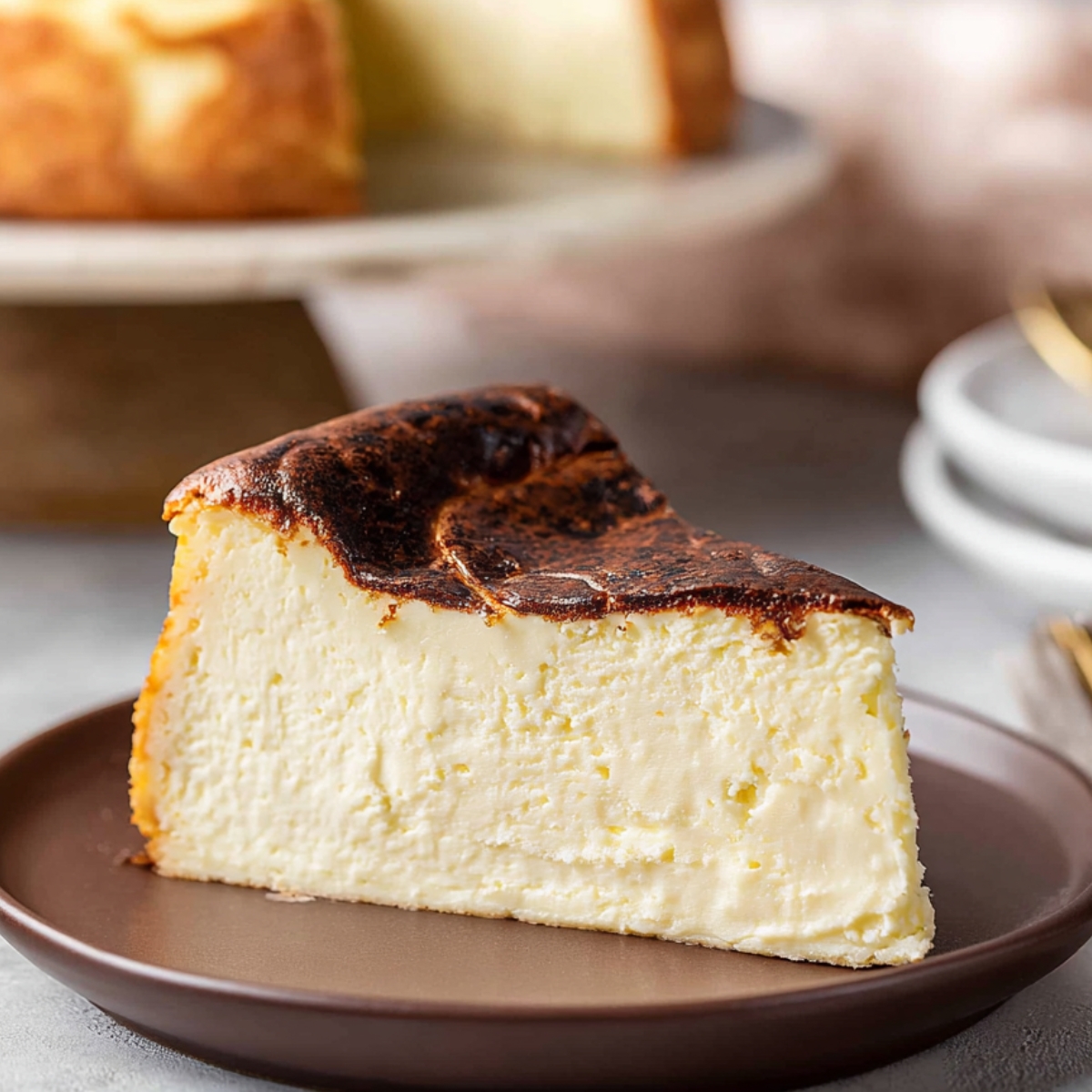
If you're already a fan of simple, no-fuss baked desserts like my Easy Cinnamon Roll Bread Pudding recipe or Easy Flourless Chocolate Cake Recipe , Easy Mango Tres Leches Cake recipe, this one is going to feel like a revelation - and it comes together in about 15 minutes of actual hands-on time.
Why You'll love this Basque Burnt Cheesecake
This burnt Basque cheesecake recipe has a lot going for it - here's the honest breakdown:
- No water bath, no crust, no cracking. It's genuinely forgiving in a way most Basque Burnt Cheesecake recipes aren't.
- Only 8 ingredients. And they're all things you can find at any grocery store.
- The burnt top is the feature, not the flaw. The darker it gets, the more complex and delicious the flavor becomes.
- Mascarpone makes the texture extraordinary. That silky, rich, custardy quality is hard to describe until you taste it.
- 15 minutes of prep. Then the oven does everything else.
- Impressive enough for a dinner party, easy enough for a Tuesday. It travels well and slices beautifully after an overnight rest.
Jump to:
Basque Burnt Cheesecake ingredients
Here's a look at each ingredient and the role it plays.
See Recipe Card Below This Post For ingredients Quantites
- Cream Cheese : This is the base of the whole recipe. Full-fat block-style cream cheese gives the Basque Burnt Cheesecake its rich, dense, ultra-creamy structure. Make sure it's fully softened before you start - cold cream cheese will leave lumps no matter how long you beat it.
- Mascarpone : This is what takes the texture from good to incredible. Mascarpone is silkier and milder than cream cheese, and it adds a luxurious, velvety quality to the filling that sets this Basque Burnt Cheesecake apart from any regular version.
- Granulated Sugar : Sweetens the batter and plays a big role in creating that caramelized top during baking. Don't reduce it - the sugar also contributes to the texture of the finished Basque Burnt Cheesecake .
- Eggs : Provide structure and that custardy, slightly molten quality in the center. Room temperature eggs blend into the batter more evenly and smoothly.
- Egg Yolks : Extra yolks add richness and a deeper golden color to the interior. They're a big part of why the center tastes almost like a warm custard.
- Heavy Cream : Keeps the batter pourable and silky, and prevents the Basque Burnt Cheesecake from baking up too dense or firm. Don't substitute with anything lighter.
- Fine Sea Salt: Just a pinch, but don't skip it. Salt balances the richness and sweetness and keeps the flavor from falling flat.
- All-Purpose Flour : A single tablespoon is all you need. It helps the Basque Burnt Cheesecake hold its shape just slightly as it sets without making it dense or cakey. More flour would ruin the custardy texture.
How to Make Basque Burnt Cheesecake
Prep your pan and preheat: Place a rack in the center of the oven and preheat to 425°F. Line a 9-inch springform pan with two large pieces of parchment paper, crisscrossed, leaving 2 to 3 inch overhangs on the sides. It doesn't need to look perfect - a little rumpled is fine and actually helps the sides release later.
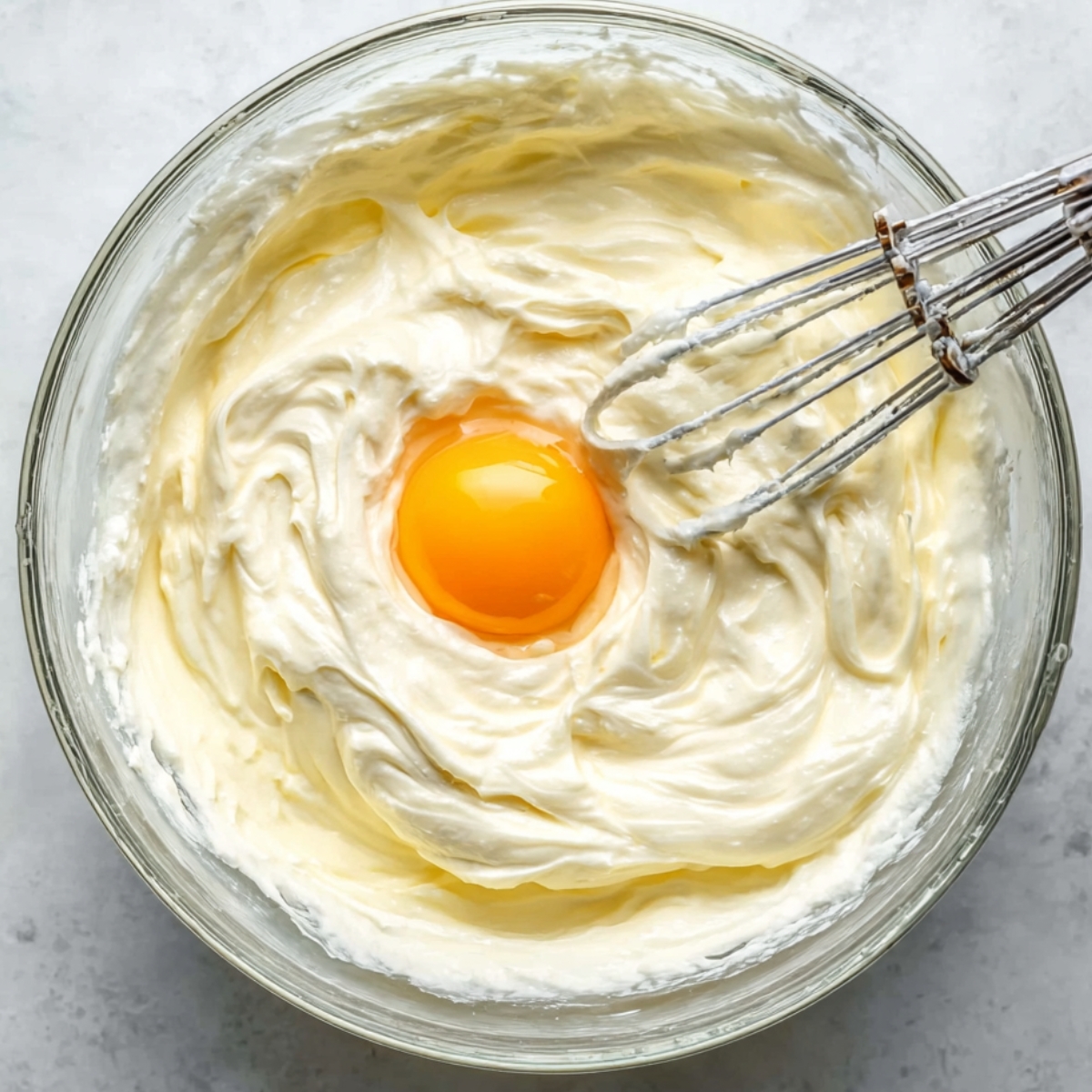
Make the filling: In a large mixing bowl, beat the cream cheese and mascarpone together until completely smooth and lump-free. Gradually add the sugar and mix until fully incorporated. Add the eggs and yolks one at a time, mixing after each addition. Mix in the heavy cream and salt. Sift in the flour last and stir until just combined. The batter will look thin and almost pourable - that's exactly right.
Bake: Pour the batter into the prepared pan and bake for 40 to 55 minutes, depending on how soft and creamy you like the center. At 40 minutes you'll get a very jiggly, almost molten center with a deeply caramelized top. At 55 minutes the center will be slightly firmer but still silky. The top should look dark - almost alarmingly so. That's the goal, not a problem.
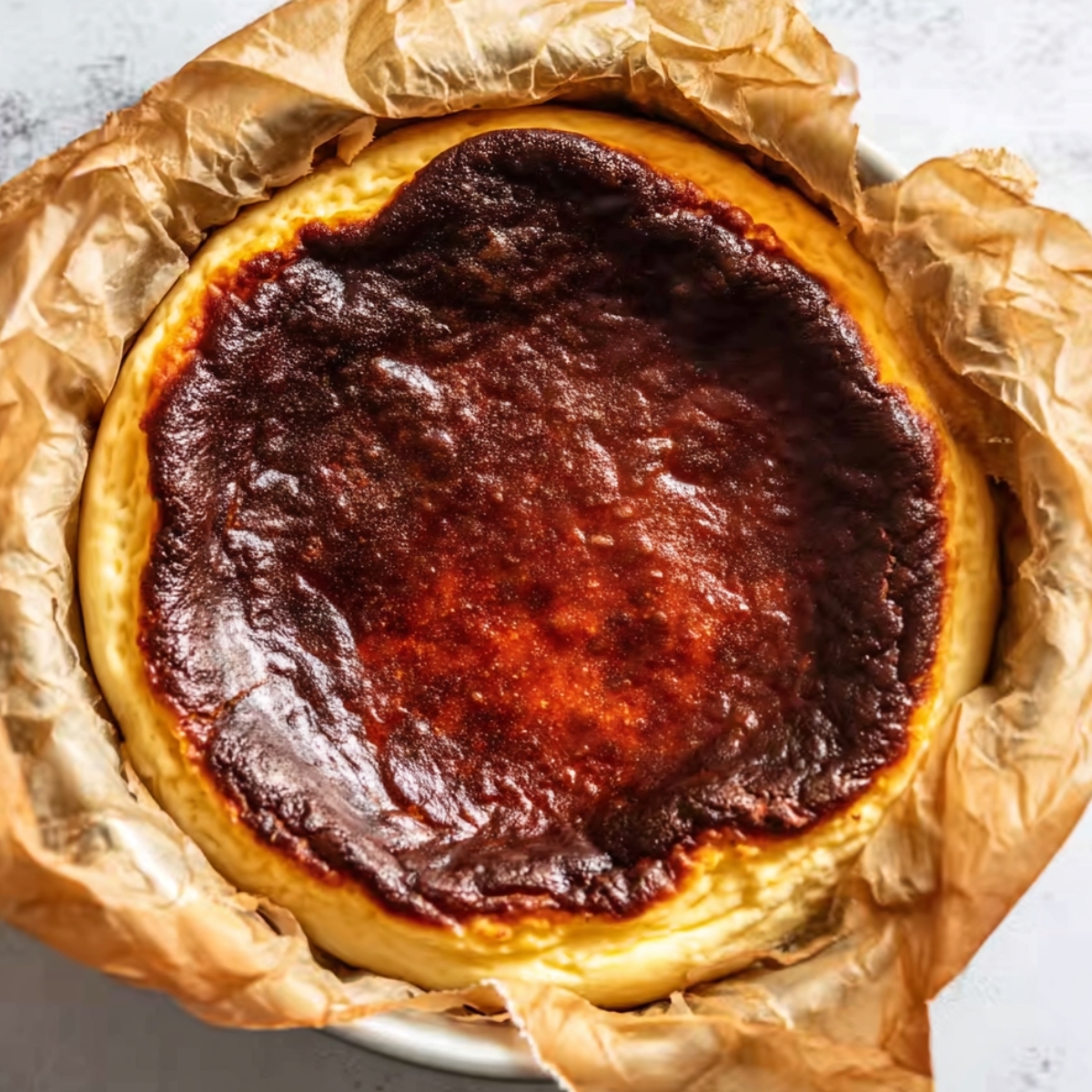
Cool on the rack: Remove from the oven and let the Basque Burnt Cheesecake cool on a wire rack for at least 1 hour. It will puff up during baking and sink gently as it cools - completely normal and part of the charm.
Refrigerate to set: Once cooled to room temperature, refrigerate for several hours - ideally overnight - without removing it from the pan. The parchment paper holds everything together. This step is non-negotiable if you want clean slices.
Serve: About an hour before serving, pull the Basque Burnt Cheesecake out of the fridge and let it come to room temperature. This brings back that perfect creamy, slightly softened texture. Release the springform sides, gently fold down the parchment paper, and slice to serve.
Swaps and Variations
Gorgonzola or Brie twist: Swap out 4 oz of the cream cheese for 4 oz of gorgonzola or brie for a savory-sweet version that's stunning on a cheese board or served before dessert.
Add a crust if you want one: Classic Basque cheesecake doesn't have a crust, but you absolutely can add one. Mix 2 ⅓ cups of crushed Maria crackers or graham crackers with 7 tablespoons of melted butter (100g). Press into the parchment-lined pan and bake for 10 minutes at 350°F. Let it cool completely before adding the Basque Burnt Cheesecake batter on top.
Vanilla version: Stir in 1 teaspoon of good vanilla extract for a softer, more classic flavor profile alongside the caramelized top.
Lemon zest: A teaspoon of fresh lemon zest stirred into the batter adds a brightness that cuts through the richness really nicely.
Equipment for Basque Burnt Cheesecake
- 9-inch springform pan
- Large mixing bowl
- Hand mixer or stand mixer
- Two large sheets of parchment paper
- Wire cooling rack
- Rubber spatula
How to Store Basque Burnt Cheesecake
In the fridge: Store the Basque Burnt Cheesecake covered, or in an airtight container, for up to 5 days. It honestly gets better after the first day as the flavors settle and deepen.
In the freezer: Wrap individual slices tightly in plastic wrap and store in a freezer-safe bag for up to 2 months. Thaw overnight in the refrigerator before serving.
Before serving: Always bring the Basque Burnt Cheesecake to room temperature for at least 45 minutes to 1 hour first. Cold cheesecake is denser and the texture isn't as beautiful - room temp is where it really shines.
expert tips
Room temperature really matters. Pull your cream cheese and mascarpone out of the fridge 1 to 2 hours before you start. Cold dairy will leave you with a lumpy batter that won't smooth out no matter how long you mix it.
Don't skip the overnight rest. The Basque Burnt Cheesecake needs time to fully set in the refrigerator. Cutting into it too early means a runny, underset center that doesn't slice cleanly - even if it tasted fine.
High heat is the whole secret. Don't be tempted to lower the oven temperature thinking you'll get a better result. The intense heat is what creates the caramelized crust and the creamy interior at the same time. It's what makes this recipe work.
The wobble is your guide. When you pull it from the oven, the center should jiggle like Jell-O when you gently shake the pan. If it sloshes around like liquid, give it a few more minutes. If it barely moves at all, it's slightly overbaked - still delicious, just a bit firmer than ideal.
Every oven runs a little differently. Start checking at 40 minutes and go from there. You'll get a feel for it after the first time.
FAQ
What is the difference between a Basque cheesecake and a regular cheesecake?
A regular Basque Burnt Cheesecake is baked low and slow with a crumb crust and careful temperature control to prevent any browning. A Basque burnt cheesecake skips the crust entirely and bakes at a very high temperature on purpose, creating a dark caramelized top and a loose, custardy center that a traditional chees ecake doesn't have. The texture is silkier, richer, and the whole thing is far more forgiving to make. Isabella would tell you it's also considerably more impressive at a dinner party.
What is a burnt Basque cheesecake?
A burnt Basque cheesecake is a crustless Spanish-style cheesecake baked at high heat until the top is deeply caramelized and nearly charred-looking. The word "burnt" is completely intentional - that dark, bittersweet crust is one of the defining features of the recipe. It's not a mistake, and it's not overcooking. It's the whole point.
Why is it called Basque Burnt Cheesecake?
It's named after the Basque Country, the region in northern Spain where it originated. The "burnt" part refers to the deliberately dark, caramelized top that gives it its distinctive flavor and appearance. It was created at a small bar called La Vina in San Sebastian in the late 1980s, and it's been a worldwide sensation ever since - the Basque cheesecake San Sebastian origin story is one of the best in modern food culture.
What is so special about Basque cheesecake?
What makes it so special is that it breaks every conventional cheesecake rule and still comes out beautifully. No crust, no water bath, no cracking prevention - you just bake it hot and fast. The burnt top creates a complex, bittersweet, almost butterscotch-like flavor, while the inside stays silky and custardy in a way that's completely unlike a classic cheesecake. It's also one of the easiest cheesecakes you can make, which is a big reason it went viral. My neighbor Isabella would add that it's also "unreasonably good," but she'd probably never admit that to my face.
Related
Looking for other recipes like this? Try these:




Pairing
These are my favorite dishes to serve with Basque Burnt Cheesecake


Basque Burnt Cheesecake
Ingredients
Method
- Preheat the oven to 425°F and place a rack in the center. Line a 9-inch springform pan with two large pieces of parchment paper, crisscrossed, with 2-3 inch overhangs.
- In a large mixing bowl, beat the cream cheese and mascarpone until smooth. Gradually add the sugar, mixing until fully incorporated. Add the eggs and egg yolks one at a time, mixing after each addition. Pour in the heavy cream and salt, then sift in the flour and stir to combine.
- Pour the batter into the prepared pan. Bake for 40-55 minutes, depending on how creamy you prefer the center. The top should turn golden, and the center should still jiggle.
- Remove from the oven and let the cheesecake cool for 1 hour on a wire cooling rack.
- Refrigerate for several hours, ideally overnight, without removing the cheesecake from the pan.
- Before serving, allow the cheesecake to sit at room temperature for an hour. Release the sides of the springform pan, fold down the parchment paper, slice, and serve.
Leave a Reply